Drain and Sewer Line Camera Inspection
Drain Camera Inspection in Eau Claire, WI
Find out whether a closer look inside the drain makes sense. Get a Free Estimate
Drain and Sewer Line Camera Inspection
Find out whether a closer look inside the drain makes sense. Get a Free Estimate
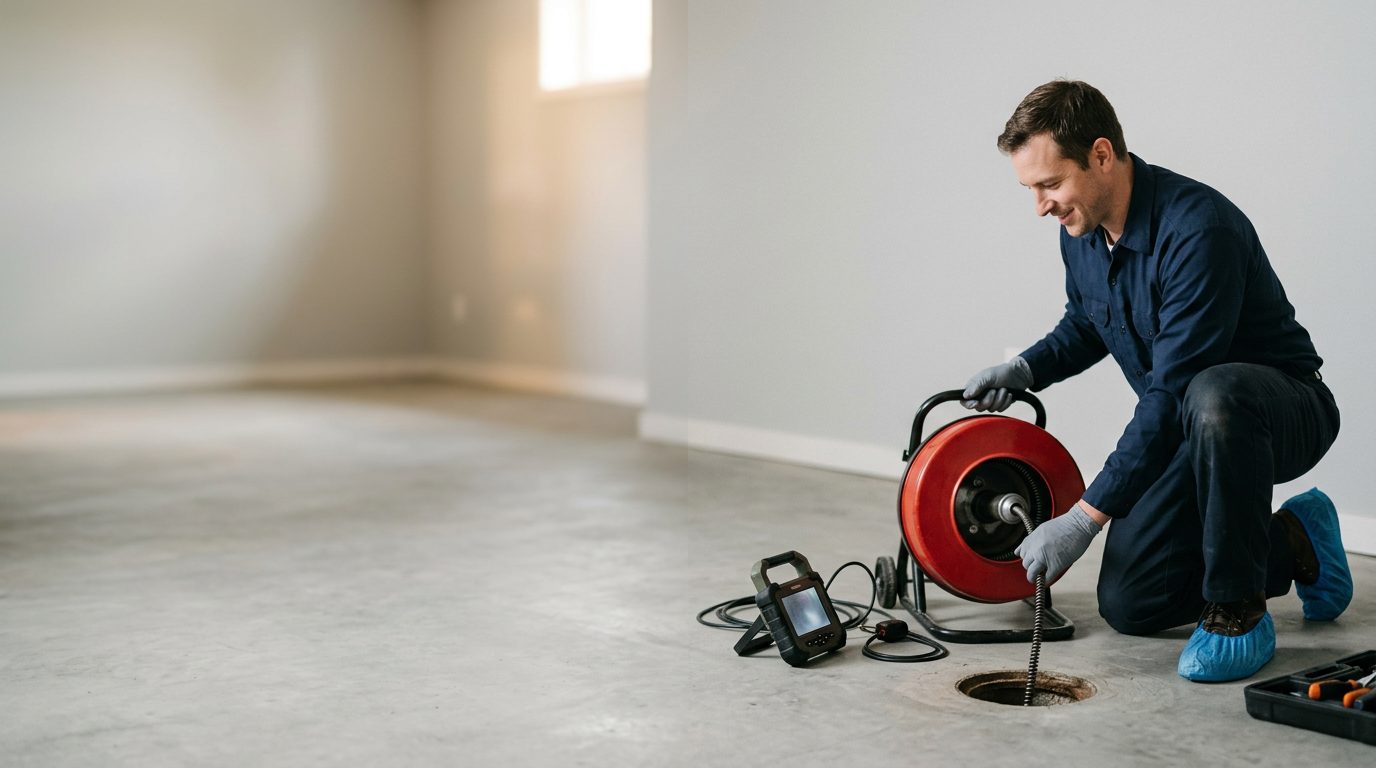
Some drainage problems are difficult to explain from the surface. A line may clog repeatedly despite cleaning, several fixtures may drain poorly, or a backup may return without an obvious reason. A drain camera inspection can provide a view inside accessible piping and help identify conditions that may be affecting wastewater flow.
Drain Cleaning Services Eau Claire offers camera inspection as a way to investigate recurring and uncertain drainage problems. We look at the symptoms first, then consider whether visual inspection is appropriate. A camera is not necessary for every simple clog, and an inspection does not automatically mean the pipe needs replacement. The purpose is to gather useful information before choosing the next step.
## A Closer Look at Drain Conditions A drain inspection camera travels through accessible piping and provides video of the interior. Depending on visibility and access, the footage may show accumulated material, standing water, root intrusion, cracks, separated joints, or other visible irregularities. The inspection can also help identify places where the camera cannot pass because of a strong obstruction, a tight bend, or another limitation. These results can guide further cleaning or investigation. ## When an Inspection Is Worth Considering A first-time sink clog is often addressed without camera work. A recurring main drain backup is different. If the same line becomes blocked repeatedly, knowing what is happening inside the pipe can help avoid repeating a cleaning method without understanding the cause. Camera inspections may also be useful when an older property has an uncertain drain history or when multiple fixtures show related symptoms. The decision should be based on the situation, not on the assumption that every blockage requires advanced equipment. ## Understanding Inspection Limitations Camera visibility depends on pipe access, water levels, buildup, and the condition of the line. A camera may not travel through a completely blocked section until sufficient access is available. Some observations may require confirmation through additional methods. A video image can help identify visible conditions, but it does not by itself determine every pipe defect, property boundary, underground location, or necessary repair. We explain what can reasonably be concluded from the inspection. ## Making an Informed Decision After a camera inspection, the useful question is what the findings mean for the drainage problem. Heavy buildup may suggest further cleaning. Visible damage may call for evaluation of repair options. A line that appears reasonably clear may require looking at fixture operation or another part of the plumbing system.
Repeated blockages may involve material that remains in the line or a condition that encourages new buildup. Camera footage can help distinguish visible accumulation from some structural concerns.
Tree roots can enter underground drainage piping through openings or compromised joints. A camera may reveal roots inside the line when visibility permits.
Cracks, separated joints, deformation, and other visible irregularities may affect drainage. Camera images can provide information that helps guide further evaluation.
Standing water inside a pipe may indicate a low section or another drainage condition. Interpretation depends on pipe layout and inspection circumstances.
Older buildings may contain a mix of original and replacement piping. Camera inspection can provide useful observations about accessible portions of a line when its condition is uncertain.
We consider whether camera work is likely to answer a useful question about your specific drainage symptoms.
We distinguish visible observations from possible causes that may require further confirmation.
An inspection is information gathering. The results determine whether cleaning, monitoring, or additional evaluation is appropriate.
Camera findings are considered alongside the history of blockages and the behavior of affected fixtures.
Explain the history of your drain problem and why you are considering an inspection.
Free — no obligations
We ask about recurring clogs, previous cleanings, affected fixtures, and possible damage concerns.
We assess whether an accessible entry point and pipe conditions allow a useful camera inspection.
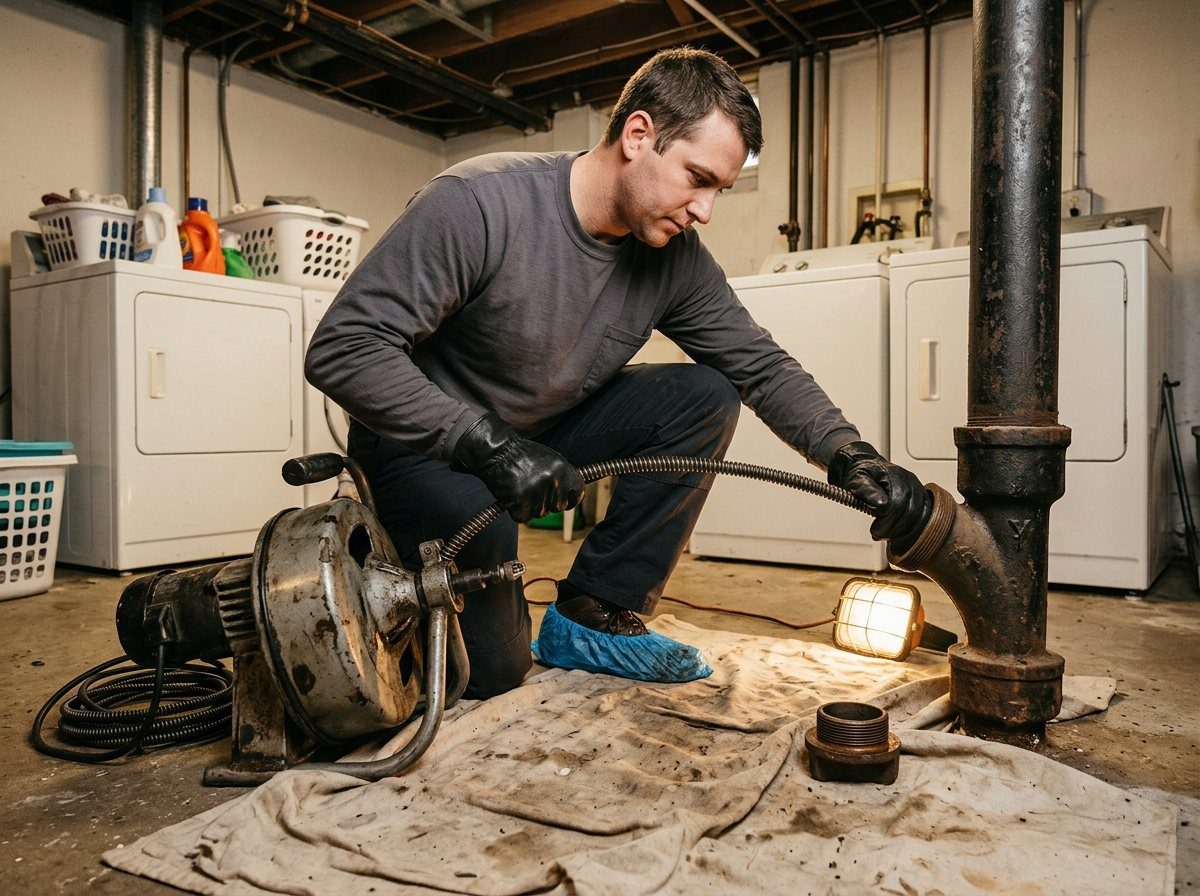
A camera is advanced through accessible piping where conditions permit.
We evaluate observations such as buildup, roots, standing water, or visible pipe irregularities.
We discuss what the findings suggest and whether cleaning or further evaluation may be appropriate.